
Hostaway vs Cloudbeds: Which PMS fits your business model?
The key takeaway: Success depends on matching a platform to your operational DNA, as Hostaway optimizes short-term rental management while Cloudbeds masters boutique hotel workflows. Selecting the right tool ensures seamless automation and avoids operational friction, especially since Hostaway’s API secures reliability with a strict limit of 15 requests every 10 seconds per IP.
Are you tired of the hostaway vs cloudbeds debate while struggling with double bookings and messy calendars across multiple platforms every single day? This comparison cuts through the marketing noise to help you identify which property management system actually aligns with your unique operational DNA to find the perfect fit for your business. 🏨 You will discover the truth about real-time synchronization speeds, mobile app performance, and those sneaky hidden fees that often trap growing managers who want to scale their portfolios with total peace of mind and long-term value. 🚀
- Hostaway vs Cloudbeds: Which PMS Actually Fits Your Model?
- Channel Management Speed and Automation Tools
- Interface Ease of Use and Support Reliability
- Scaling Your Portfolio and Long-Term Value
Hostaway vs Cloudbeds: Which PMS Actually Fits Your Model?
Choosing between these giants isn’t about which is “better,” but which one aligns with your specific operational DNA. You need a tool that mirrors how you actually work every day. 🏨
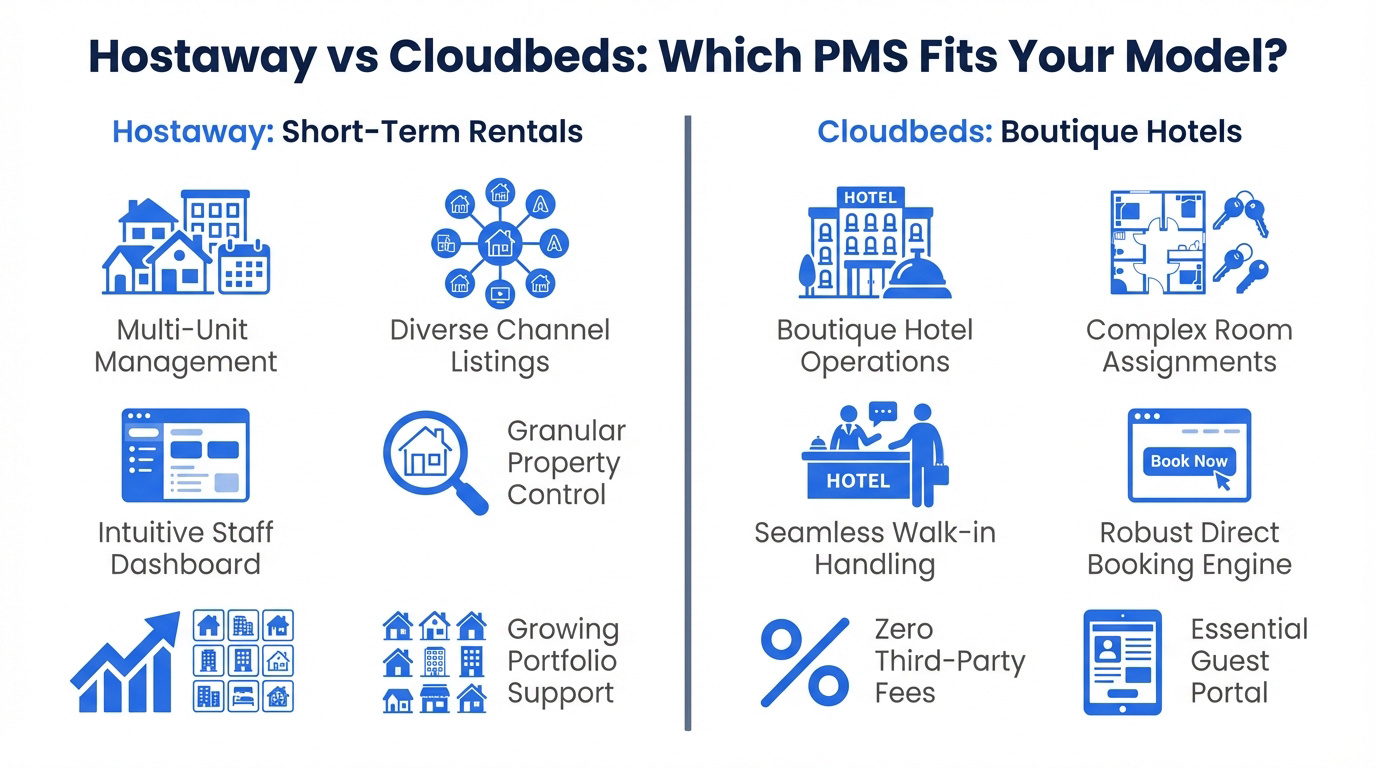
Hostaway Strengths for Short-Term Rental Experts
Managing vacation rentals is a different beast. You juggle scattered listings across Airbnb and VRBO. Hostaway uses a specific multi-unit logic. It is built for short-term stays and high-volume turnover.
Seasonal hires shouldn’t need a PhD to check guests in. The interface is clean and straightforward. It doesn’t require technical expertise to navigate effectively.
You get granular control over property performance. This matters when scaling a diverse portfolio. 📈
PMS Fit Finder: Hostaway or Cloudbeds?
Answer 3 questions to find your ideal platform match.
Question 1/3
What is your primary property type?Vacation Rentals / AirbnbsBoutique Hotel / B&BMixed Portfolio
Question 2/3
What is your most critical daily task?Syncing multi-unit listings across OTAsManaging walk-ins and front-desk opsAutomating guest communication
Question 3/3
How would you describe your team?Remote or seasonal staffProfessional on-site hotel staffSolo operator
Your Personalized Recommendation
Cloudbeds is optimized for traditional hospitality, front-desk operations, and direct booking power.
Hostaway is the best fit for mixed portfolios needing high-level automation and versatility.
Hostaway is built for STR scaling, multi-unit OTA logic, and remote team management.Next QuestionNext QuestionSee My Result
Result
Based on your operational DNA, this platform will best support your growth.Restart Quiz
If you want more of the two channel manager you can read here our expert Hostaway review and Cloudbeds review.
Cloudbeds Advantages for Traditional Boutique Hotels
Boutique hotels face hurdles like walk-ins and complex room assignments. Cloudbeds handles traditional hotel operations with grace. It is designed for properties with a physical lobby.
Direct bookings help you survive without losing 20% to commissions. Their tool captures guests directly on your website. This avoids third-party fees and works well.
Hostaway: STR Experts
Focuses on multi-unit logic and automation for short-term stays.
Cloudbeds: Boutique Hotels
Prioritizes front-desk ops and direct booking engine power.
Different property types require different management styles. Urban apartments differ from resorts.
Their guest portal is a massive win. It is a vital feature for hotels today. ✨
Channel Management Speed and Automation Tools
While the business model sets the stage, the real magic—or nightmare—happens in the background with synchronization and guest messaging.
Preventing Double Bookings with Real-Time Speed
En effet, real-time synchronization is the backbone of any PMS. A lag causes double booking disasters. In the hostaway vs cloudbeds debate, API reliability is the deciding factor.
Overlapping reservations ruin your reputation and cost money in relocation fees.
Pricing updates must reflect instantly across all connected booking channels.
Reliability is the goal. Nobody wants to fix calendar errors at midnight.
| Feature | Hostaway Performance | Cloudbeds Performance | Winner for Speed |
|---|---|---|---|
| API Sync Speed | Ultra-Fast | Reliable | Hostaway |
| Multi-Channel Reliability | High | High | Tie |
| Pricing Update Latency | Minimal | Moderate | Hostaway |
| Overbooking Protection | Robust | Reliable | Hostaway |
| Mobile Sync | Instant | Fast | Hostaway |
Managing Guest Communication Through AI Tools
D’ailleurs, AI saves your team from answering the same Wi-Fi questions fifty times.
These platforms suggest replies based on guest behavior, making the experience feel personal.
Check-in automation and cleaning task management also benefit from these triggers.
Efficiency is the prize. Your staff can focus on guests.
- Automated check-in instructions sent via SMS or email.
- AI-powered response suggestions for common guest inquiries.
- Task assignment triggers for cleaning staff upon guest checkout.
Efficiency Boost
Automation reduces manual labor for repetitive questions, tel que Wi-Fi passwords, allowing your team to breathe 🚀.
Interface Ease of Use and Support Reliability
Automation is great, but your team still needs to touch the software every day, often from a smartphone in a hallway.
Mobile App Performance for Teams on the Move
Property management doesn’t happen behind a desk. Your staff is mobile, checking rooms and handling maintenance. The iOS and Android apps must be more than just stripped-down websites.
Examine cleaning coordination features. A good app lets a cleaner mark a room as ready with one tap.
Discuss the interface quality for daily operations. If the buttons are too small or the menu is buried, your team will hate using it. Frustration leads to data entry errors.
Stability is vital for mobile tools. Crashing apps during a busy check-in window is unacceptable.
Support Availability During Technical Emergencies
Software glitches are inevitable, but silence from support is a choice. When the calendar breaks on a Saturday, you need a human, not a chatbot. Rate the responsiveness of both teams during these critical technical emergencies.
Contrast support quality across tiers. Often, the best help is locked behind the most expensive subscription levels.
Warning
Check if high-level support is locked behind expensive subscription tiers before signing a contract.
Evaluate help resources. Good training materials and a searchable knowledge base can solve minor issues without a ticket.
Fast support saves your revenue. Waiting three days for a reply is simply not an option.
Scaling Your Portfolio and Long-Term Value
Beyond the daily tasks, you have to look at the horizon and see how these tools help or hinder your growth.
Onboarding Complexity and Potential Hidden Fees
Onboarding isn’t a quick setup. It’s a weeks-long process of moving data and training your entire team. Some platforms make this switch much more painful than others.
Financial Alert
Watch for one-time implementation fees and charges for additional users. Reading the fine print regarding mandatory add-ons is non-negotiable.
Watch out for the hidden costs. Setup fees, mandatory training packages, and “add-on” features can double your expected monthly bill. Transparency is rare in the PMS world.
Compare long-term value. A cheaper initial price might cost more in lost time and manual workarounds later.
Always read the fine print. Mandatory add-ons are a common trap for new managers.
- One-time implementation fees that can reach thousands of dollars.
- Charges for additional users or specific channel connections.
- Fees for premium customer support or dedicated account managers.
API Flexibility for Multi-Unit Scaling
As you grow, you’ll need your PMS to talk to other software. API availability separates a closed system from a scalable ecosystem. Analyze how easily you can connect custom tools. This matters for your hostaway vs cloudbeds choice.
Scaling a portfolio requires serious flexibility. Adding fifty units shouldn’t break your workflow or your bank account.
Review your payment processing options. Financial integrations must be seamless to handle security deposits and guest refunds without a hitch.
Data security is non-negotiable. Confirm the platform meets all modern compliance standards for guest payments.
Selecting between these management giants depends on your unique business DNA. 🧬 Hostaway empowers short-term rental experts, while Cloudbeds streamlines boutique hotel operations. Pick the platform matching your model today to automate growth and reclaim your freedom. Your perfectly synchronized future starts with this one right choice. 🚀
FAQ
Is Hostaway or Cloudbeds better for managing vacation rentals?
The choice really depends on your operational DNA. If you are a short-term rental expert handling multiple listings across Airbnb and VRBO, Hostaway is usually the winner. It is built specifically for the vacation rental “daily grind,” offering granular control over individual property performance and a logic that fits multi-unit management perfectly. 🚀
However, if you run a boutique hotel, Cloudbeds is likely the better fit. It handles traditional hotel operations—like walk-ins and complex room assignments—with much more grace. It’s all about choosing the tool that aligns with your specific business model!
How much do Hostaway and Cloudbeds actually cost in 2024?
Hostaway uses a flexible pricing model that scales with you. You can expect monthly fees to start around $40 per listing, though this can drop to $20 as your portfolio grows. Keep in mind there is usually a setup fee ranging from $100 to $500. It’s a transparent way to pay for what you actually use. 💰
Cloudbeds is a bit more traditional and requires you to request a custom quote. While they don’t publish flat rates, they often offer incentives, like a $250 credit after you complete a demo. For both platforms, always watch out for hidden costs like mandatory training packages or fees for additional users.
Can I try Hostaway or Cloudbeds for free before committing?
Hostaway does not offer a traditional free trial. Because the system takes between 2 and 8 hours to set up properly, they prefer to offer paid trials or personalized demonstrations. This ensures you actually learn how to use the tools effectively rather than getting lost in a blank dashboard. 🛠️
Cloudbeds also focuses heavily on the demo process. Since it’s a unified growth engine for hospitality, they want to make sure the software fits your hotel’s specific needs before you sign on the dotted line. You can usually schedule a walkthrough to see if the interface feels right for your team.
Do these platforms have reliable mobile apps for teams on the move?
Yes, both platforms understand that property management doesn’t happen behind a desk! 📱 Cloudbeds offers a native app for iOS and Android that allows your front desk to handle check-ins, check-outs, and housekeeping status from anywhere. While powerful, some users have reported occasional stability issues or login errors, so it’s worth testing during your demo.
Hostaway also prioritizes mobile usability. Their dashboard is designed to be user-friendly for non-technical staff, which is vital when you are hiring seasonal help. Whether you are checking a calendar or coordinating a cleaning crew, both tools aim to keep your team mobile and efficient.
How do Hostaway and Cloudbeds prevent double bookings?
Both systems use real-time synchronization and API connections to keep your calendars in sync across OTAs like Booking.com and Expedia. This is the backbone of your business; a five-minute lag can lead to a double-booking nightmare. Hostaway is particularly strong at handling multi-channel reliability for short-term stays.
Cloudbeds excels at managing availability for traditional hotel room types. By using a centralized channel manager, both platforms ensure that as soon as a guest books on one site, your availability updates everywhere else instantly. This automation saves you from manually fixing calendar errors at midnight! 🌙
Is it easy to integrate other tools with Hostaway?
If you like to customize your tech stack, you’ll appreciate that Hostaway provides a robust, RESTful public API (v1). It allows you to connect third-party apps for accounting, revenue management, or automated check-ins. They even support webhooks, which means your other tools get notified the second a new reservation hits your calendar. 🔗
Cloudbeds also offers deep integrations, focusing on creating a “unified” experience. Whether you need to handle security deposits or sync with financial software, both platforms are designed to act as the central “brain” of your hospitality business, allowing for seamless data flow as you scale your portfolio.